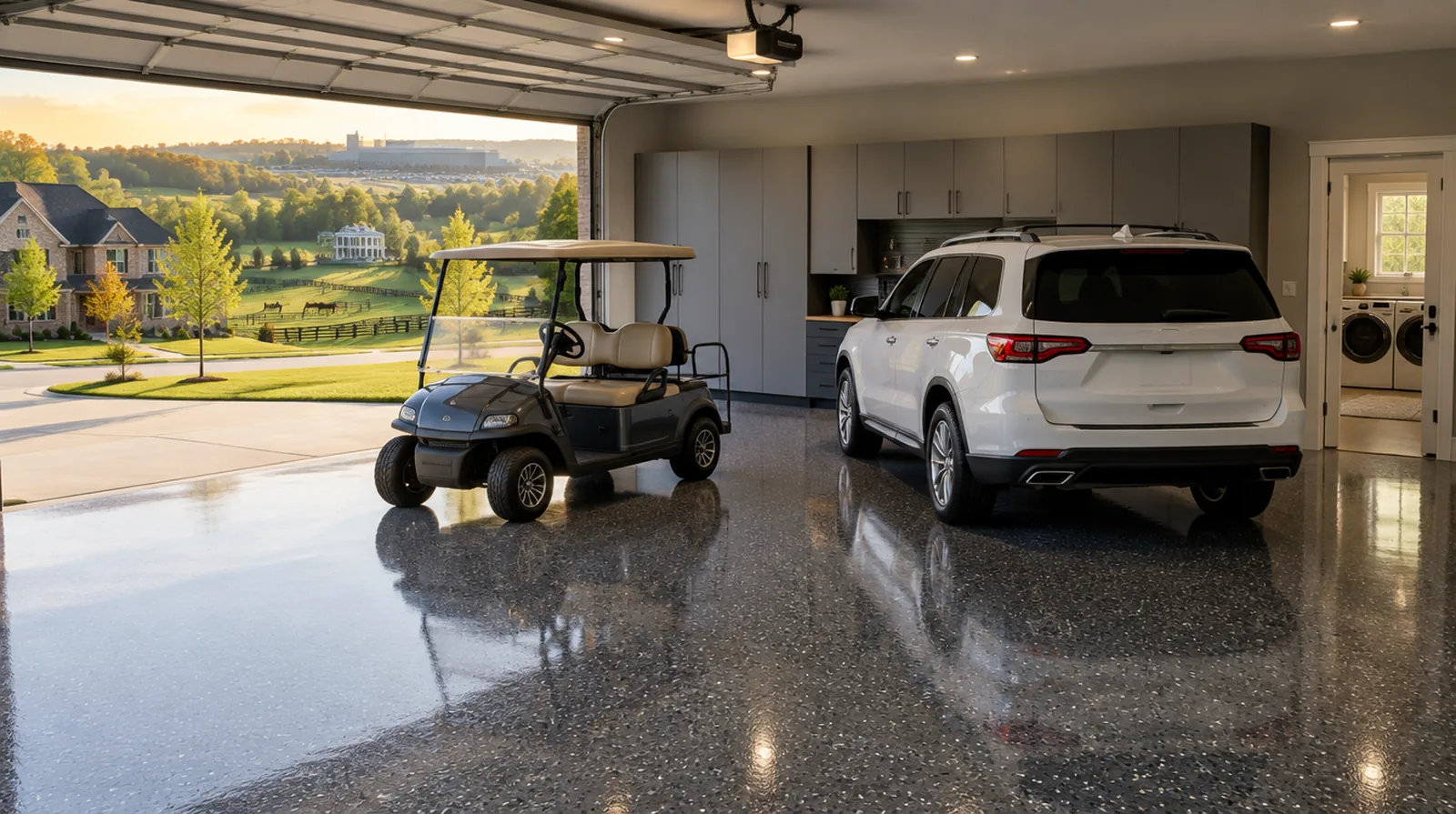
The family entrance
In most homes here, people come and go through the garage far more than the front door. Groceries, sports bags, strollers and muddy cleats all pass through. That makes the garage floor one of the most used surfaces in the house, yet builders leave it as raw concrete. An epoxy system turns it into a floor you are happy to walk on in socks, one that wipes clean after a rainy soccer practice.
What new slabs need
Fresh concrete is not automatically ready for coating. Many builders spray a curing compound that leaves a film on the surface, and finishers often trowel garage slabs to a dense, slick finish. Both block primer from soaking in. That is why kits that rely on cleaning and etching fail so often in new homes. We grind the slab with diamond tooling to cut through the film and open the pores. You end up with a surface that feels like coarse sandpaper, ready to bond.
New slabs also develop small shrinkage cracks in the first year. We route and fill them so they do not mirror through the finished floor, and we can fill saw-cut control joints if you want an uninterrupted look.
Resale homes and older garages
Not every garage in town is brand new. Homes from the first waves of growth are now twenty years old or more, and their garages show oil stains, fertilizer burns and worn spots where tires turn. Some have peeling paint or kit coatings. We grind those off completely, degrease stubborn stains and patch pitting before starting fresh.
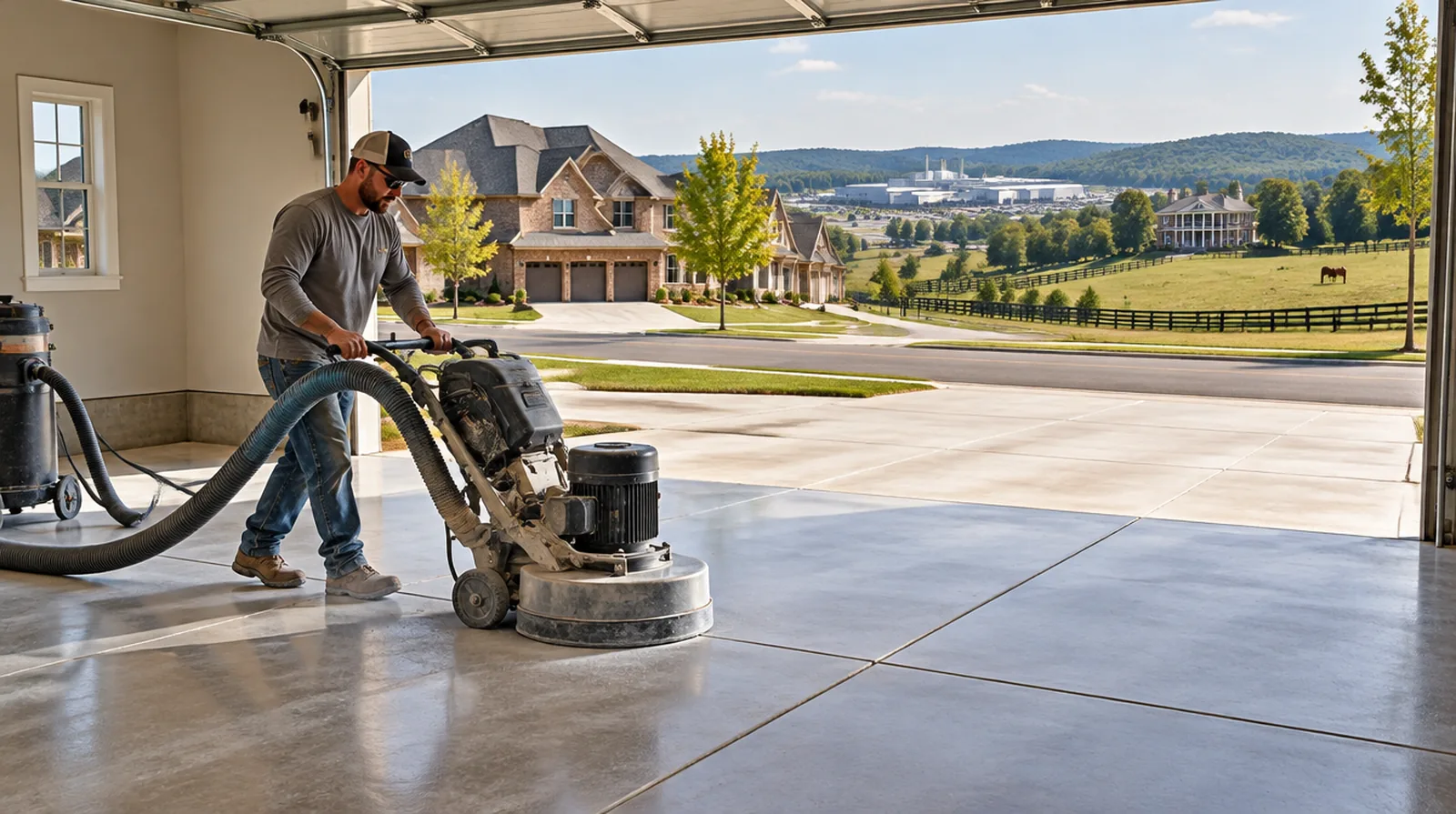
How the system goes down
- Moisture test and inspection.
- Diamond grinding with dust extraction, edges done by hand.
- Crack, pit and joint repair.
- Epoxy primer worked into the open concrete.
- Color base coat with a full flake broadcast.
- Scrape, vacuum and clear polyaspartic topcoat.
The polyaspartic topcoat is the key to resisting hot tire pickup in July heat. It also stays clear in sunlight rather than ambering, which matters in garages with west-facing doors that stay open while kids play in the driveway.
Matching the house
Stone and brick exteriors in town tend toward warm tans, grays and creams. Flake blends that pick up those tones make the garage feel like part of the design. Darker charcoals look sleek with black hardware and modern farmhouse exteriors. Lighter blends brighten garages used as gyms or hobby spaces. We bring physical samples and lay them on your slab under your lighting.
Golf carts, bikes and trailers
Golf carts are common in many neighborhoods, and their batteries can drip acid that etches bare concrete. A coated floor resists those drips if you wipe them up. Bike stands, trailer jacks and lawn mower decks can scratch any floor, so we recommend pads under sharp points. Flake floors hide minor scuffs well.
Timeline
- Day one: prep, repairs, primer and flake.
- Day two: topcoat.
- Walk: next day.
- Drive: two to three days, sooner with a full polyaspartic system.
Daily care
Keep a push broom handy and sweep grit weekly. Rinse pollen in spring, when yellow dust coats everything in middle Tennessee. Mop with a pH-neutral cleaner, and avoid harsh degreasers that can dull the gloss. Wipe up battery acid, brake fluid and pool chemicals as soon as you see them.
Questions
Will the HOA care?
Garage floors are rarely regulated, but we are happy to provide product details if needed.
How warm or cold can it be?
We install in most seasons and adjust products for temperature and humidity.
Can you coat the step into the house?
Yes, and many homeowners add a cove base along the walls too.
Book a free estimate
Contact us to schedule a moisture test and a written garage quote.
Storage and organization
Plenty of homeowners pair a new floor with wall panels, overhead racks and cabinets. We suggest clearing everything before install and planning storage once the floor cures, since mounting systems after coating keeps the floor uninterrupted beneath shelving and makes later cleaning far simpler.
to price your garage floor.
Call (931) 486-8814 for a free estimate.