
Why seal?
Concrete is porous. Rain, pool water, sprinkler overspray, leaves and red clay soak in, leaving stains, mildew and rust marks. In winter, water in the pores freezes and can scale the surface, especially where de-icing salt is used. A sealer blocks most of that, keeping the concrete cleaner and more durable.
What we seal
- Driveways and parking pads
- Front walks and steps
- Back patios and porches
- Pool decks
- Barn aisles and equipment pads
- Commercial sidewalks and dumpster pads
Types of sealer
Penetrating sealers soak in and repel water without changing the look. They are ideal for driveways and walks where traction matters.
Acrylic sealers leave a film that deepens color and adds sheen. They suit stamped or decorative concrete on patios.
Polyaspartic and urethane sealers are tougher films for covered porches and heavy-use areas.
We recommend a type based on the surface, sun exposure and how you use it.
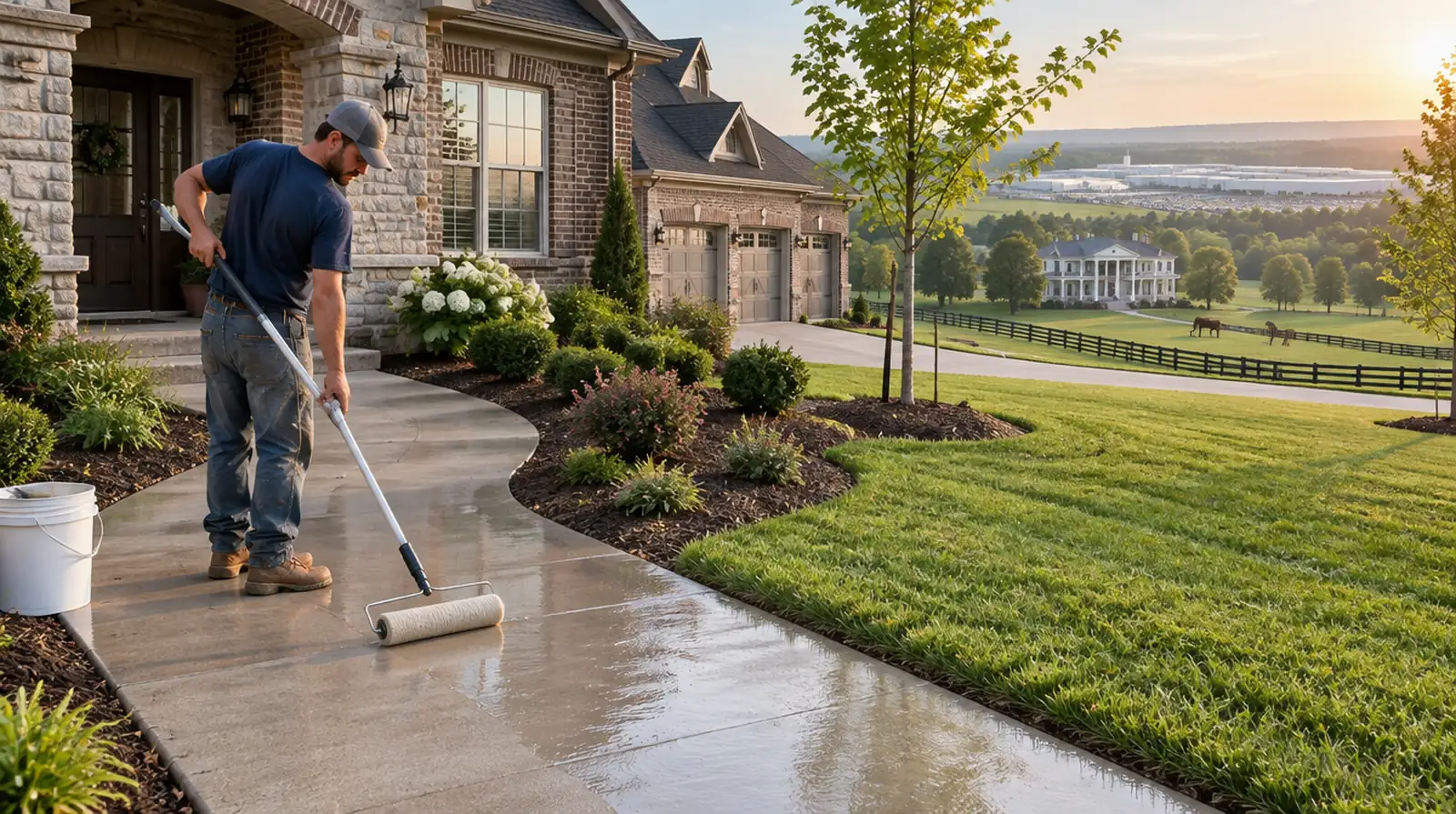
Preparation
Sealer only works on clean concrete. We pressure wash, treat mildew and algae, remove oil and rust stains as far as possible and let everything dry. Cracks are filled with flexible material, and joints are cleaned out. Sealing over dirt just locks it in.
Pool decks
Pool decks deal with chlorine, sunscreen, constant splashing and bare feet. We use sealers that stay slip resistant when wet and add grit if needed. Lighter finishes keep deck surfaces cooler on hot afternoons. Sealing before the season opens keeps the deck easier to clean all summer.
Barns and farm surfaces
Horse farms and hobby barns on the edges of town often have concrete aisles, wash racks and feed rooms. Sealing these areas makes cleanup easier and reduces dusting. Textured finishes keep footing safe for animals and people.
New concrete
Many new homes have driveways and patios poured within the last year or two. Concrete should cure for about a month before sealing. Sealing early in its life protects the surface before stains and scaling start, and it keeps that new look longer.
How often
Penetrating sealers last several years. Film-forming sealers need recoating every two to three years on sunny surfaces. We can set reminders and return for maintenance sealing.
Questions
Will it be slippery?
Penetrating sealers do not change traction. Film sealers can have grit added.
Can sealing remove stains?
Cleaning lifts many stains, but sealing mainly prevents new ones.
When can I use the surface?
Foot traffic in a few hours, vehicles after a day.
Protect your concrete
Request a quote for sealing your patio, walk or pool deck.
Stamped and decorative patios
Stamped concrete patios are popular in new backyards, and they lose their color quickly without sealer. We clean them thoroughly, apply color restorer if needed and recoat with a sealer that brings back the deep, rich look. Adding a fine grit keeps the surface safe when wet from rain or pool splashes, so the patio stays both handsome and practical.
Commercial sidewalks
Shopping centers, offices and churches have long stretches of sidewalk that take heavy foot traffic, gum, spills and de-icers. Sealing them reduces staining and scaling and makes pressure washing more effective. We schedule commercial sealing early in the morning or on weekends to keep entrances open and avoid disrupting customers.
Choosing the right season
Sealer needs dry concrete and moderate temperatures to cure well. Spring, after pollen season eases, and early fall are the best windows here. In summer we start at dawn so the slab is not too hot, and we watch forecasts closely because a pop-up afternoon storm can ruin a fresh coat. If rain threatens, we reschedule rather than gamble with your patio.
to quote your sealing project.
Call (931) 486-8814 for a free estimate.