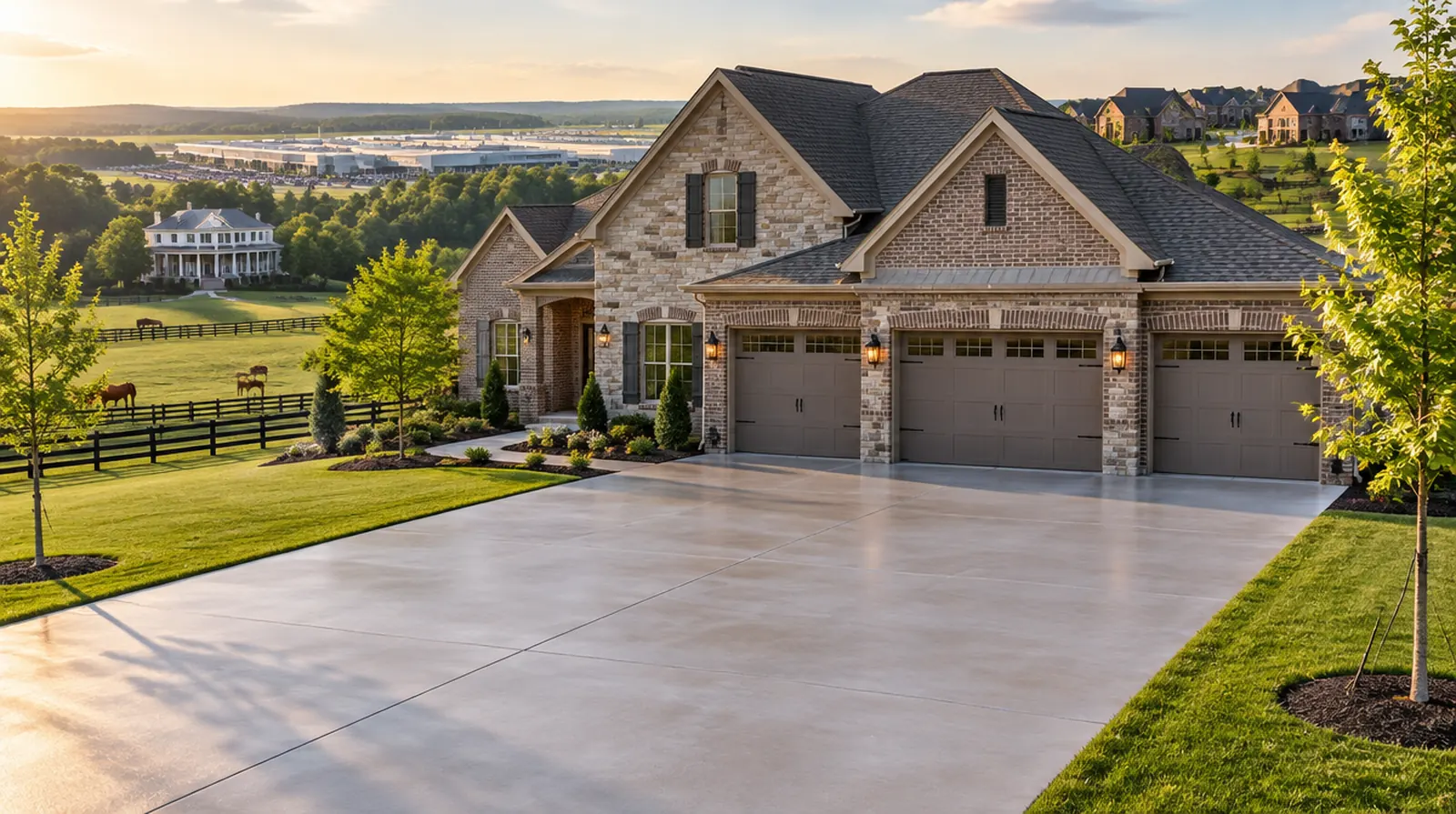
Typical driveway problems
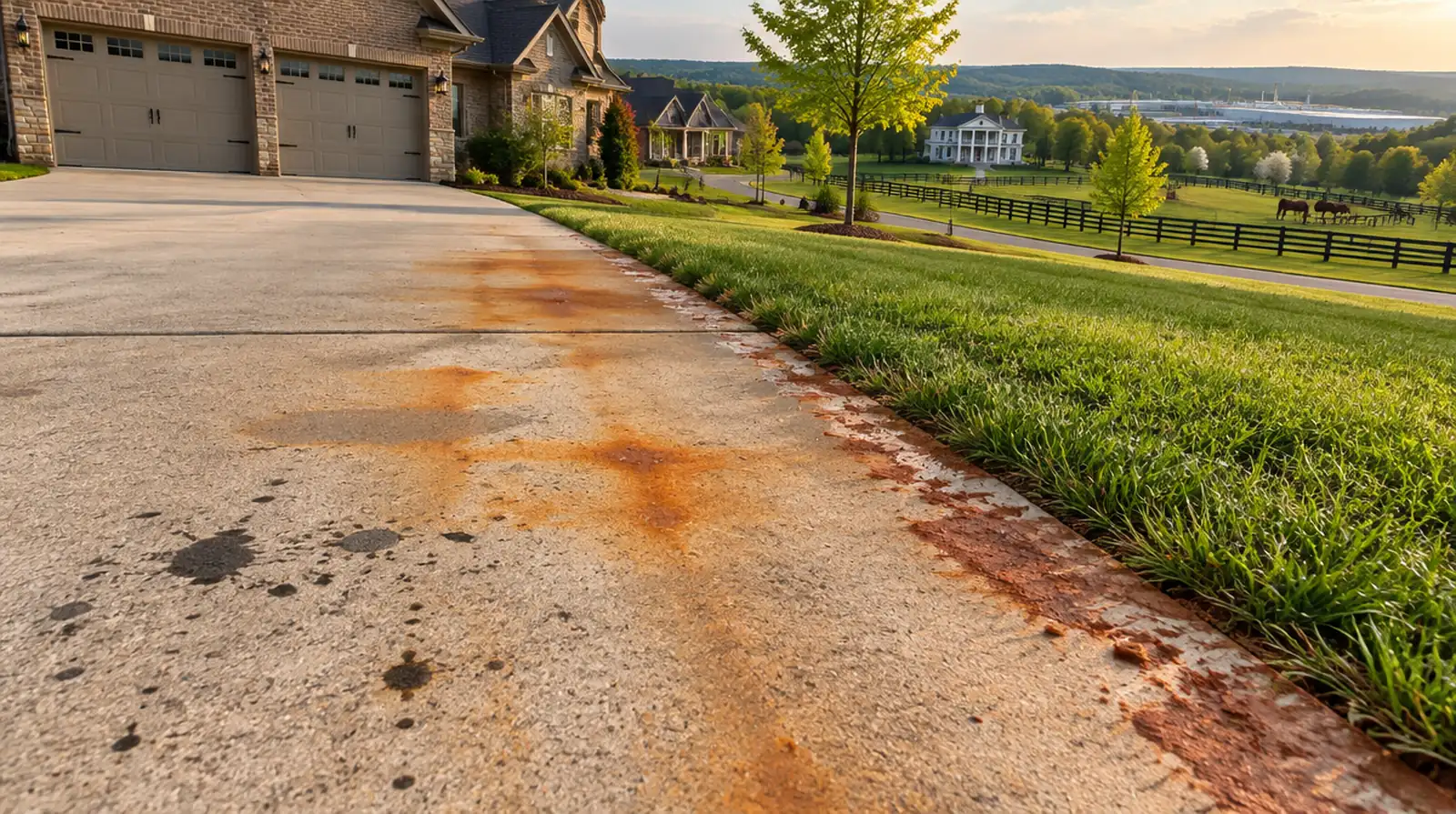
Driveways here deal with sprinkler water that leaves orange rust stains, red clay washing off new landscaping, oil drips, tire marks and leaf tannins in fall. Winters bring the occasional ice storm and de-icing salt, which can cause the surface to flake. Sun and rain gradually wear away the top layer, leaving a rough, dull look.
Coating options
Penetrating sealer: protects without changing the look. Good for newer driveways in decent shape.
Tinted sealer: evens out color differences from patches and stains.
Resurfacing overlay: a thin cement layer over worn or scaled concrete, followed by sealer. It gives the driveway a fresh surface.
Glossy garage-style coatings are not used on full driveways because they become slippery and can fail in sun and freeze cycles.
Rust removal
Well water and some irrigation systems leave rust stains along driveways and walks. We use specific rust removers that lift the stain without damaging concrete, then seal to make future stains easier to clean. Adjusting sprinkler heads to avoid hitting the driveway helps too.
Preparation
- Pressure washing with surface cleaners.
- Treating oil, rust and clay stains.
- Filling cracks and resetting control joints.
- Repairing spalled areas with patching mortar.
- Letting the surface dry before applying sealer.
Long driveways
Larger lots and farm properties may have driveways that run hundreds of feet. We plan these in sections so you keep access, and we can coordinate with neighbors or HOAs when shared drives are involved.
When to coat
Spring and fall are ideal, with mild temperatures and lower humidity. Summer work is scheduled early in the day. We avoid coating before rain or when freezing temperatures are forecast.
Maintenance
Rinse driveways a few times a year, especially after pollen season and leaf drop. Clean oil spots before they soak in. Reseal every few years to maintain protection. Use calcium magnesium acetate instead of rock salt in winter if possible.
Questions
How long before I can drive?
Usually 24 hours after sealing; longer after resurfacing.
Can you match the walk and patio?
Yes, we can seal all exterior concrete at once for a consistent look.
Do you coat asphalt?
No, we work only with concrete.
Refresh your driveway
Contact us for a free driveway estimate.
New construction driveways
Builders often pour driveways quickly and leave them unsealed. In the first winter, salt and freeze cycles can start scaling the surface, especially at the bottom where plows push snow and slush. Sealing a new driveway after the first month of curing protects it from the start and keeps it looking like new longer, which also helps resale value.
Repairing settled sections
Some driveways have sections that sink or tilt because soil settled after construction. We do not lift slabs, but we can recommend reputable leveling services and coordinate so the driveway is leveled before we clean and seal. Coating a slab that is still moving is a waste of money, so we always check first.
Matching the house
Tinted sealers can warm up gray concrete to complement stone and brick exteriors. We test small areas so you see the result before we commit to the whole driveway, and we can extend the same finish to walks and porches so the entire front of the home looks consistent.
Curb appeal and resale
When homes go on the market, buyers notice stained, flaking driveways right away. A cleaned and sealed driveway makes the whole property look cared for. Many sellers call us a few weeks before listing photos are taken, and the difference shows clearly in pictures. It is one of the least expensive ways to boost first impressions before a sale.
to price your driveway.
Call (931) 486-8814 for a free estimate.